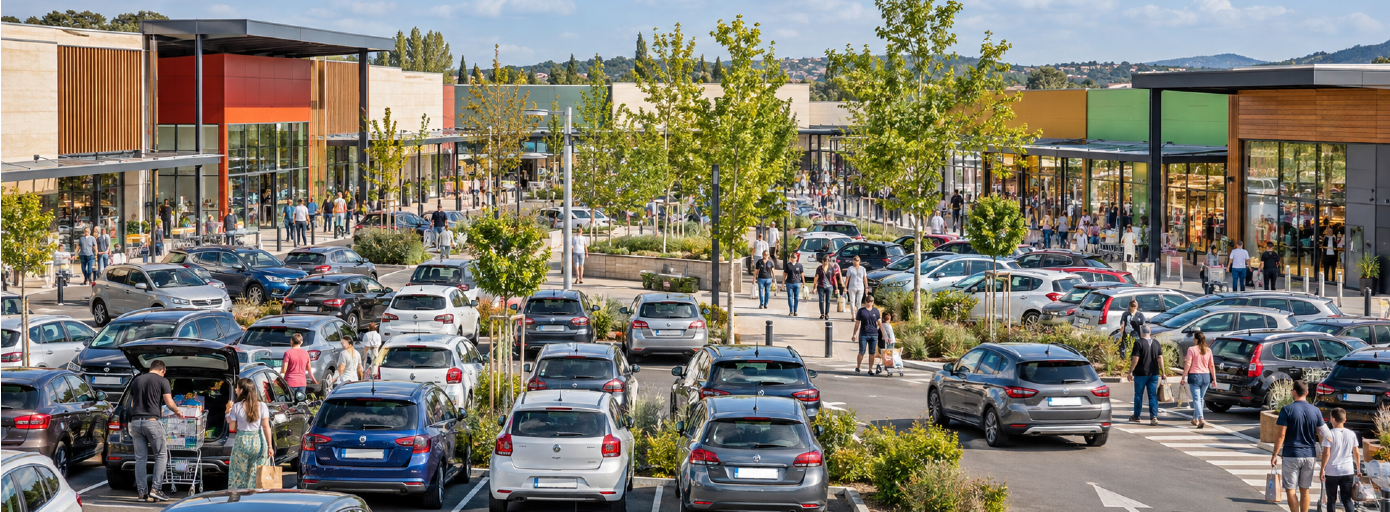
Heightened caution surrounding major purchases is influencing occupier demand, creating opportunities for value-led retail.
Structural decline in major purchase appetite
Value now sits more firmly at the heart of the retail park proposition. In reaching this point, though, the sector has loosened its historic affinity with traditional bulky-goods and homeware retailing.
Catalysing change are two closely related behaviours: a greater propensity to save and a more cautious attitude towards major purchases. Since 2020, the eurozone household savings rate has averaged 15.4%, well above the 12.4% average during the previous decade. Similarly, the gap between the EU's headline consumer confidence indicator and households' assessment of whether the current economic situation is adequate for making major purchases rarely exceeded five index points before the pandemic (Figure 4).
Since then, the major purchases measure has persistently lagged overall consumer confidence, by as much as 23 index points in 2023. The divergence suggests consumers have become materially more selective in how discretionary spending is deployed, particularly on larger-ticket items. Successive inflationary and geopolitical shocks appear to have left a lasting imprint psychologically, encouraging precautionary saving and bolstering the appeal of value retail.
The post-pandemic consumer has become harder to tempt, but in some respects easier to understand: purchases are increasingly judged through the lens of value and necessity.
Chris Nichols, Analyst, European Research
Traditional bulky goods categories cede ground
These behavioural adjustments have clearly filtered through into retail sales and, by extension, occupier mix. Over the past three years, necessity-led and budget-oriented categories have outperformed traditional bulky-goods segments in terms of European market growth (Figure 5). This is consistent with heightened price sensitivity and the postponement of big-ticket purchases, lending credibility to the trends outlined in Figure 4.
More telling still is how the occupier base has adapted. While bulky goods, homewares and electrical retailers remain central to the retail park proposition, they no longer dominate in the way they once did. In mature retail warehousing markets such as the UK, these categories accounted for almost half of retail warehouse floorspace in 2012. By 2025, that share had fallen to 31%, as grocery, particularly discount grocery and discount variety operators, captured an increasing share of space. While the precise composition varies across Europe, many markets track the same movement towards a higher weighting of value-led and essential retailing (Figure 6). In doing so, the sector has become more closely aligned with prevailing consumer spending habits and better equipped to withstand periods of economic stress.
Retailers driving expansion momentum
A handful of occupiers stand out for both the pace of their growth and the extent to which their offer aligns with retail warehousing. Unsurprisingly, the common thread appears to be a highly affordable proposition combined with an operating model capable of scaling (Figure 7).
Read the other articles within European Retail Warehousing below